

Ideas on audit, risk, governance and better decision-making.
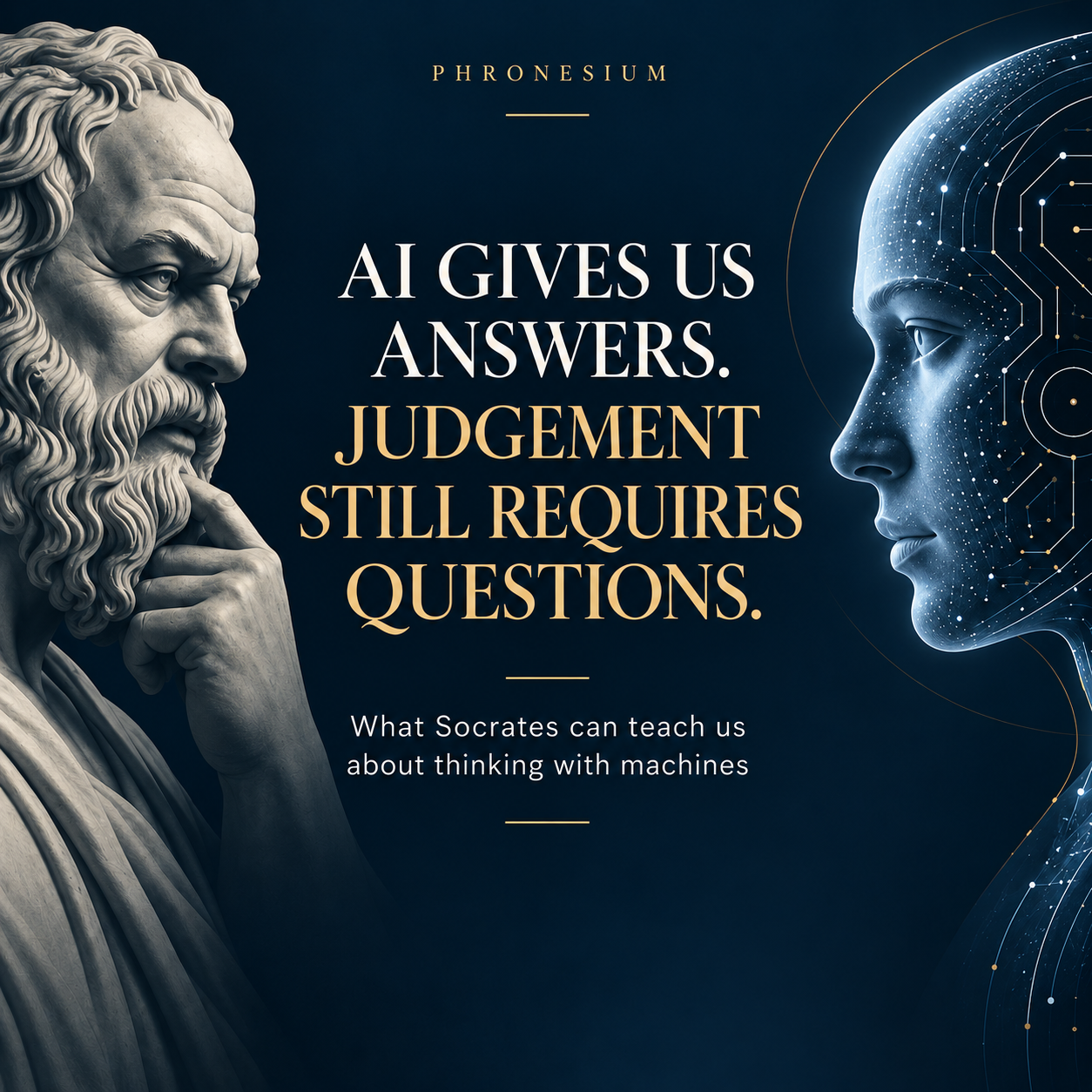
What Socrates can teach us about thinking with machines
AI is very good at giving us answers.
The real question is whether we stop there.
A polished response can feel like certainty. It is not. Good judgement still requires challenge, evidence and another question.
Socrates understood that more than two thousand years ago.
This short Phronesium visual essay explores how an ancient method of questioning can help us use modern AI more intelligently — not as an authority, but as a thinking partner.
The machine answers. We ask why.
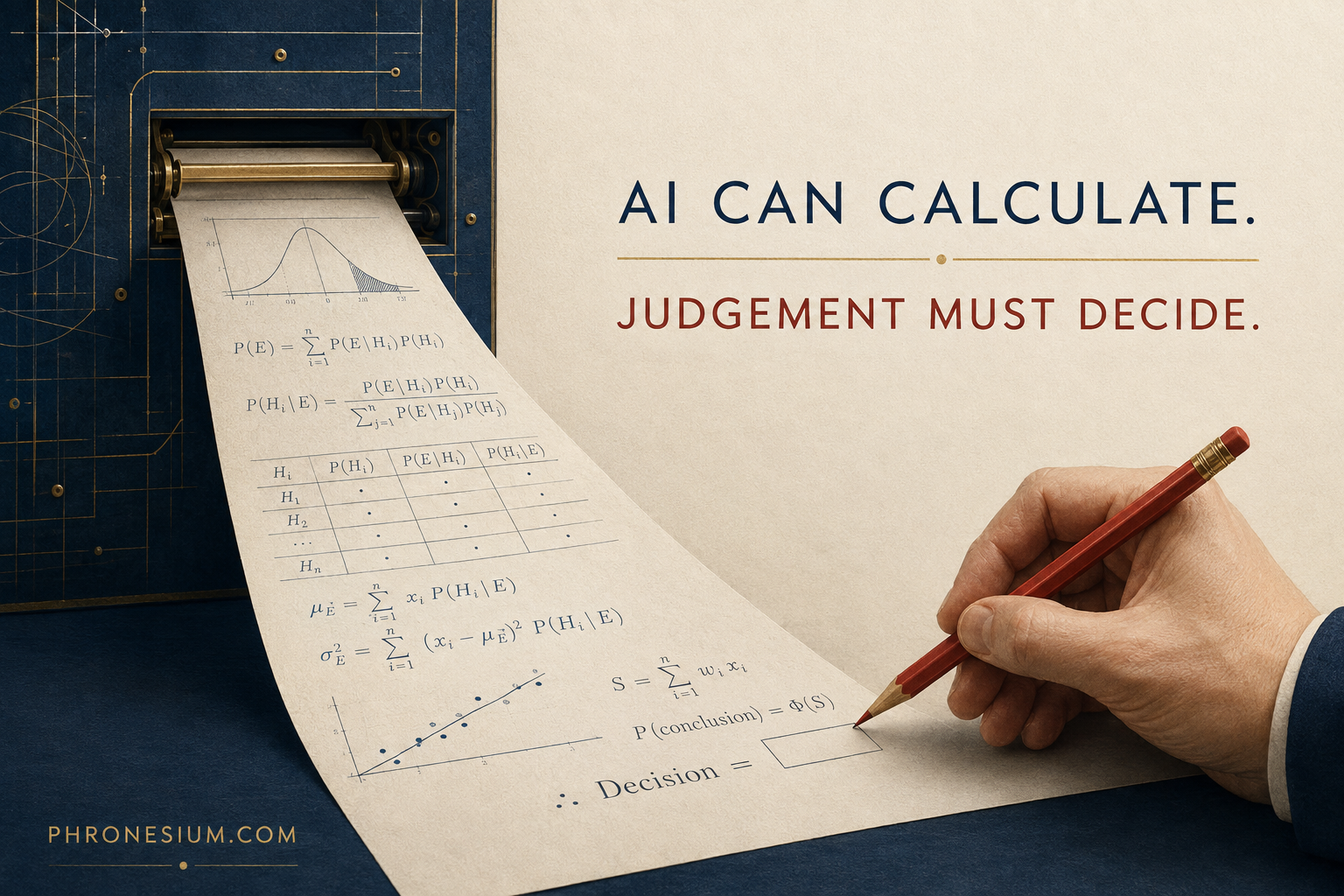
AI Can Calculate the Probability. It Cannot Decide What Matters
AI can calculate faster than us, detect patterns we miss and produce answers in seconds. But it cannot decide what matters.
Drawing on Hannah Fry’s reflections on mathematics, probability and human nature, this article explores a simple truth: numbers can inform a decision, but they cannot make it for us. Good judgement still requires context, values, empathy and responsibility—qualities that stubbornly refuse to fit neatly into a spreadsheet.
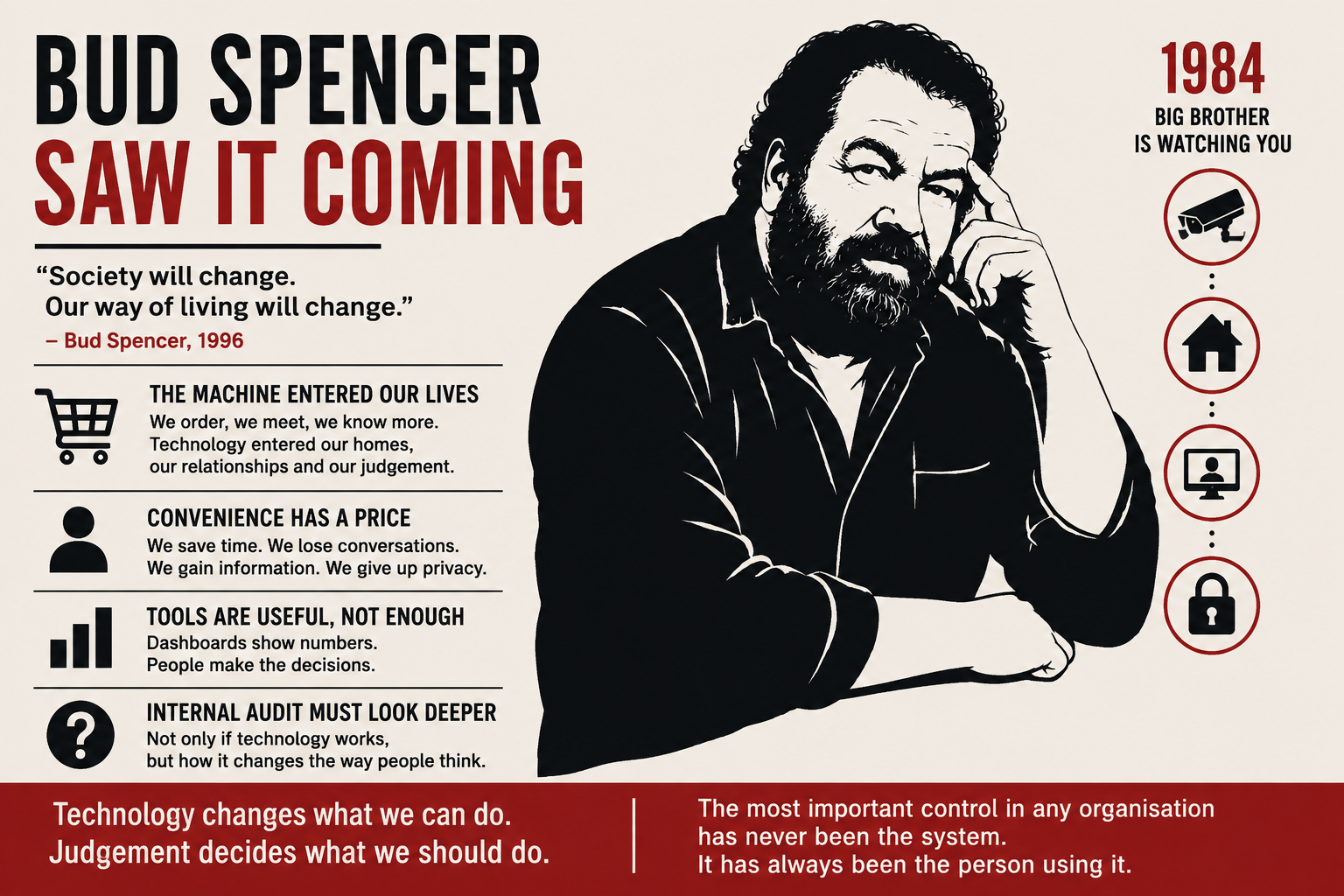
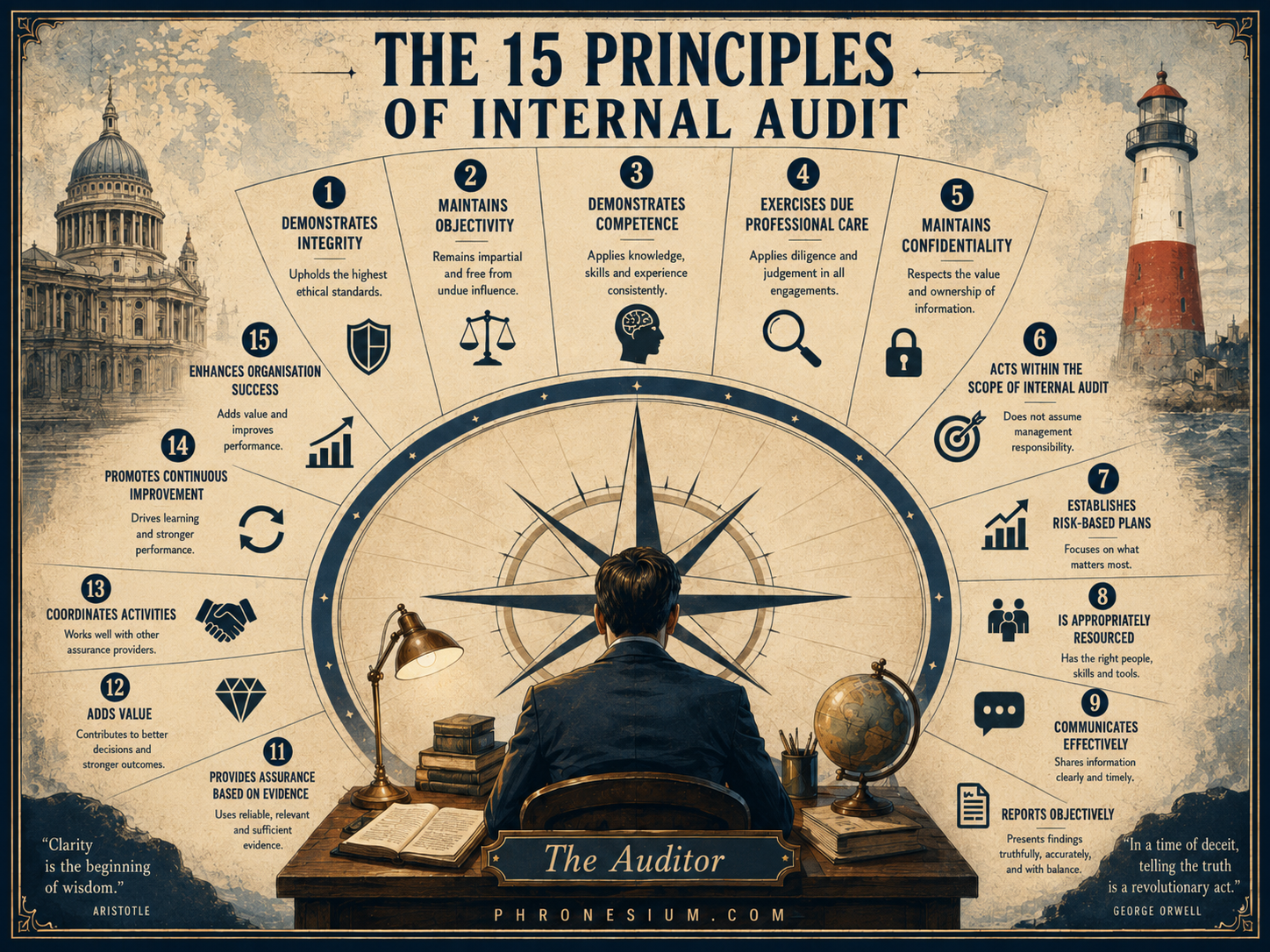
Which Is the Most Important Principle of Internal Audit?
The Global Internal Audit Standards contain fifteen principles, and the official answer is that they all matter. Naturally, this is correct—and not terribly exciting.
But is there something missing?
Perhaps one principle quietly holds the others together. Without it, an auditor may follow every standard, complete every checklist and still miss the point.
At Phronesium, we have a candidate.
What would yours be?
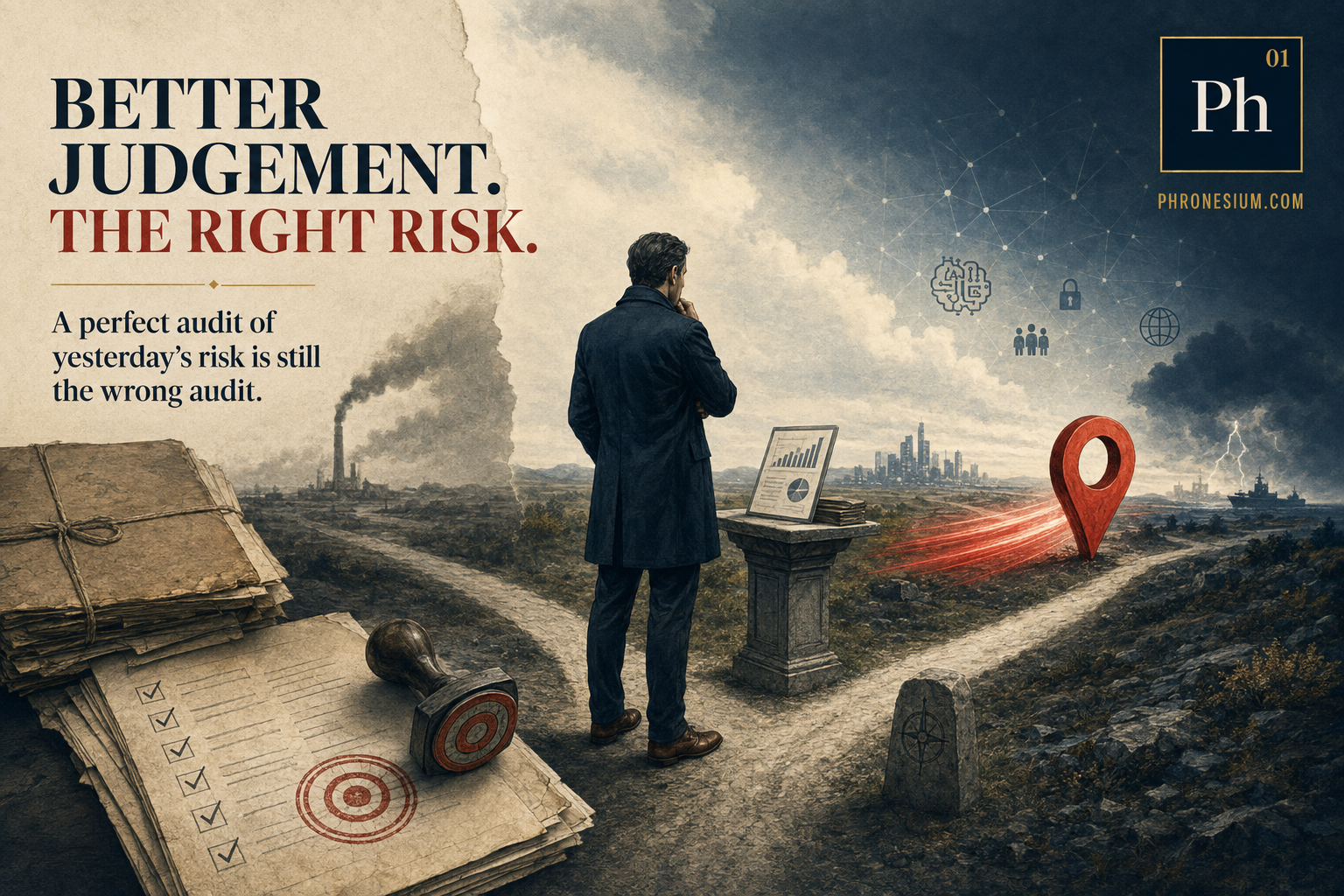
The Risk Has Moved. Has Internal Audit?
Risk is changing faster than many audit plans. Stacey Schabel, the IIA’s new Global Board Chair, argues that internal audit must follow the risks that matter now—not produce perfect audits of risks that have already moved elsewhere.
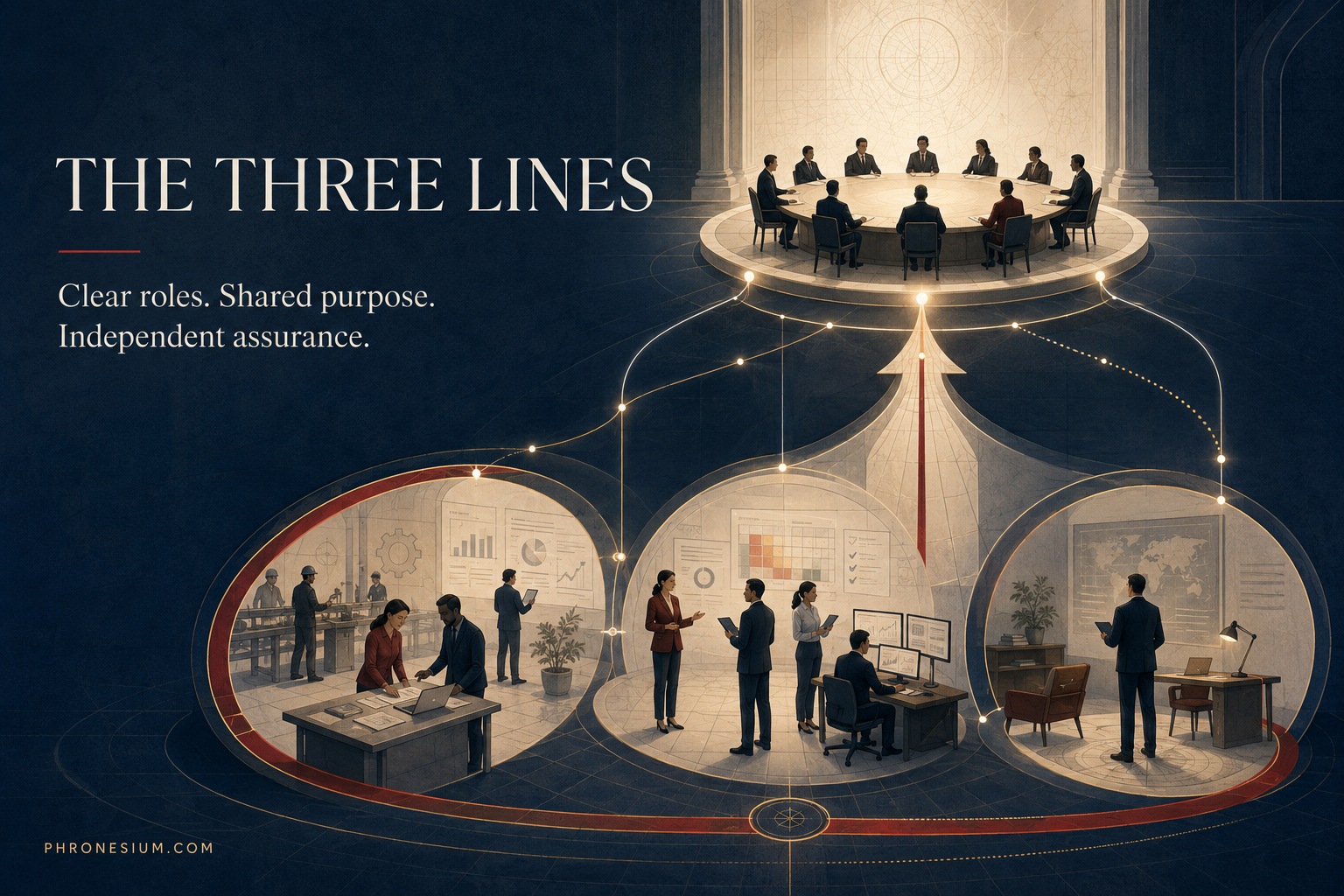
Three Lines. One Board. Fewer Places to Hide.
Boards need reliable information. A confident nod from management is not assurance. It is a conversation.
The IIA’s updated Three Lines Model explains how management, specialist functions and internal audit give the board three different views of the organisation. It also clarifies where assurance ends, advice begins and accountability remains.
Management manages. Specialists support and challenge. Internal audit independently asks whether the whole system can be trusted.
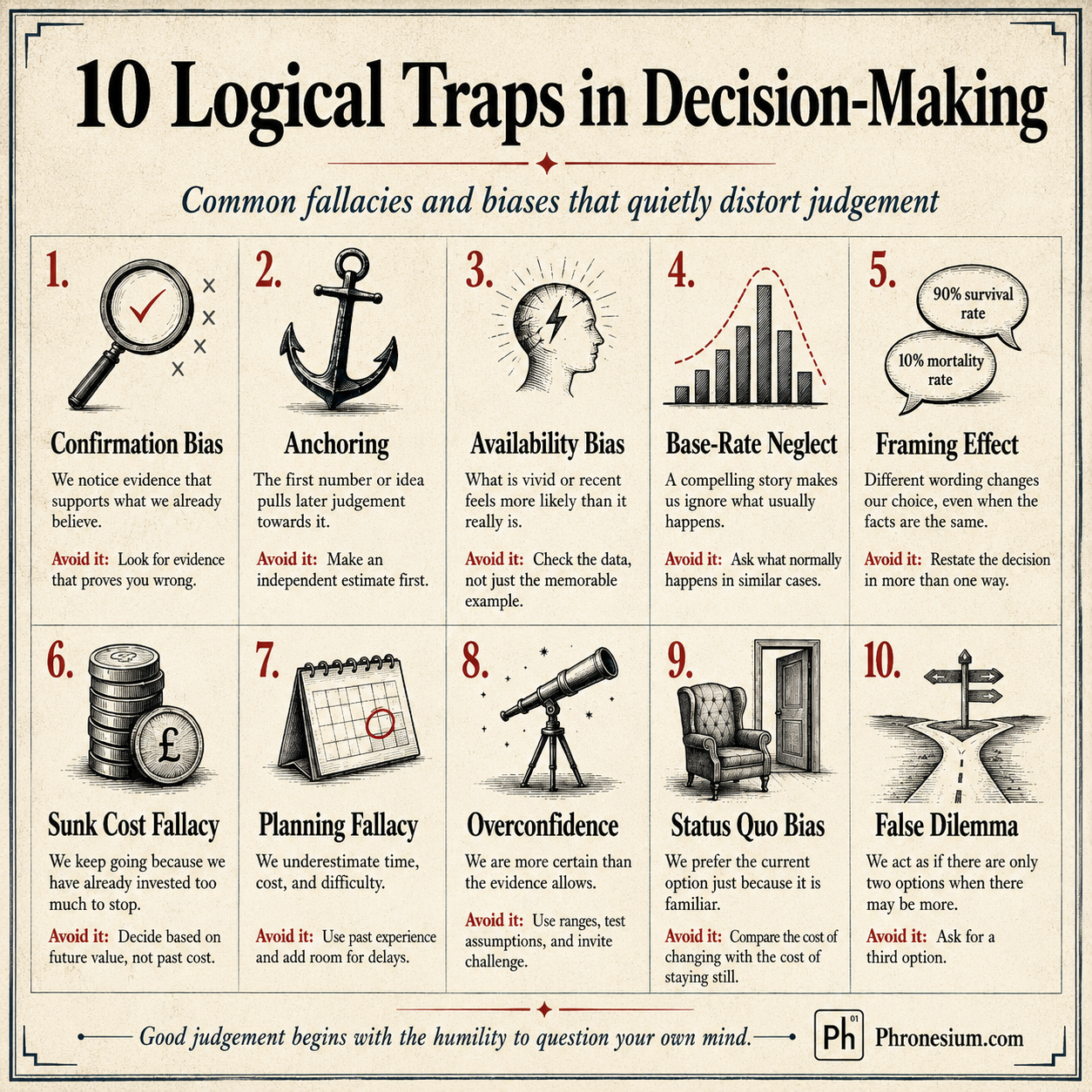
10 Traps in Decision-Making
Better decisions are not blocked only by a lack of information. They are also distorted by the shortcuts of the mind.
Confirmation bias, anchoring, overconfidence and the sunk cost fallacy can make weak choices feel perfectly reasonable. This article explores ten common decision-making traps, explains how they work and offers practical questions to help us resist them.
Good judgement does not require a perfect mind. It requires the humility to question an imperfect one.
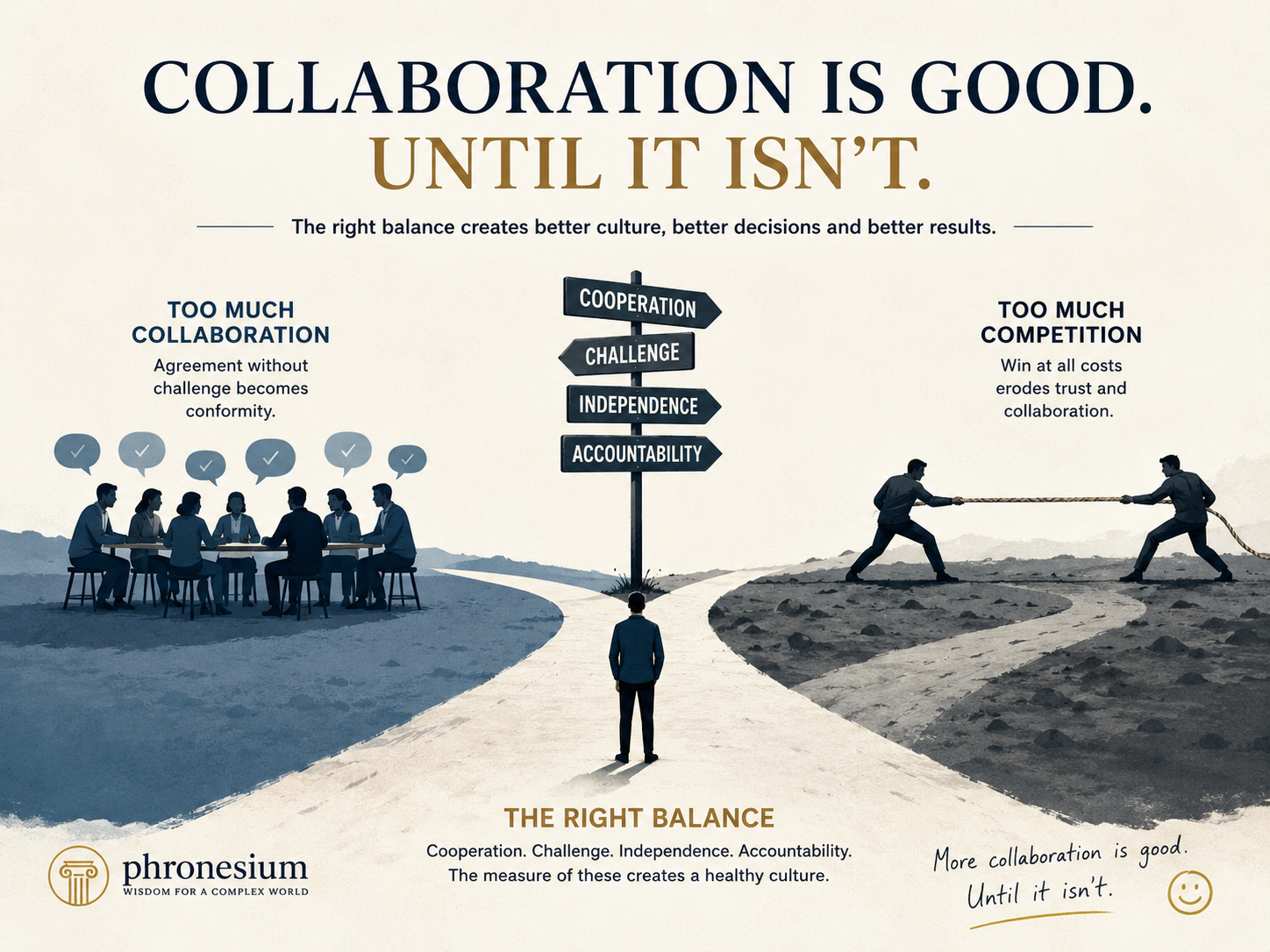
Collaboration Is Good. Until it isn’t.
Collaboration is usually treated as an unquestionable good. But what happens when cooperation becomes conformity, or when competition creates the challenge an organisation actually needs?
Inspired by a reflection from Sandro Boeri, this article explores a simple idea: the goal is not more collaboration or more competition, but the judgement to know when each is useful.
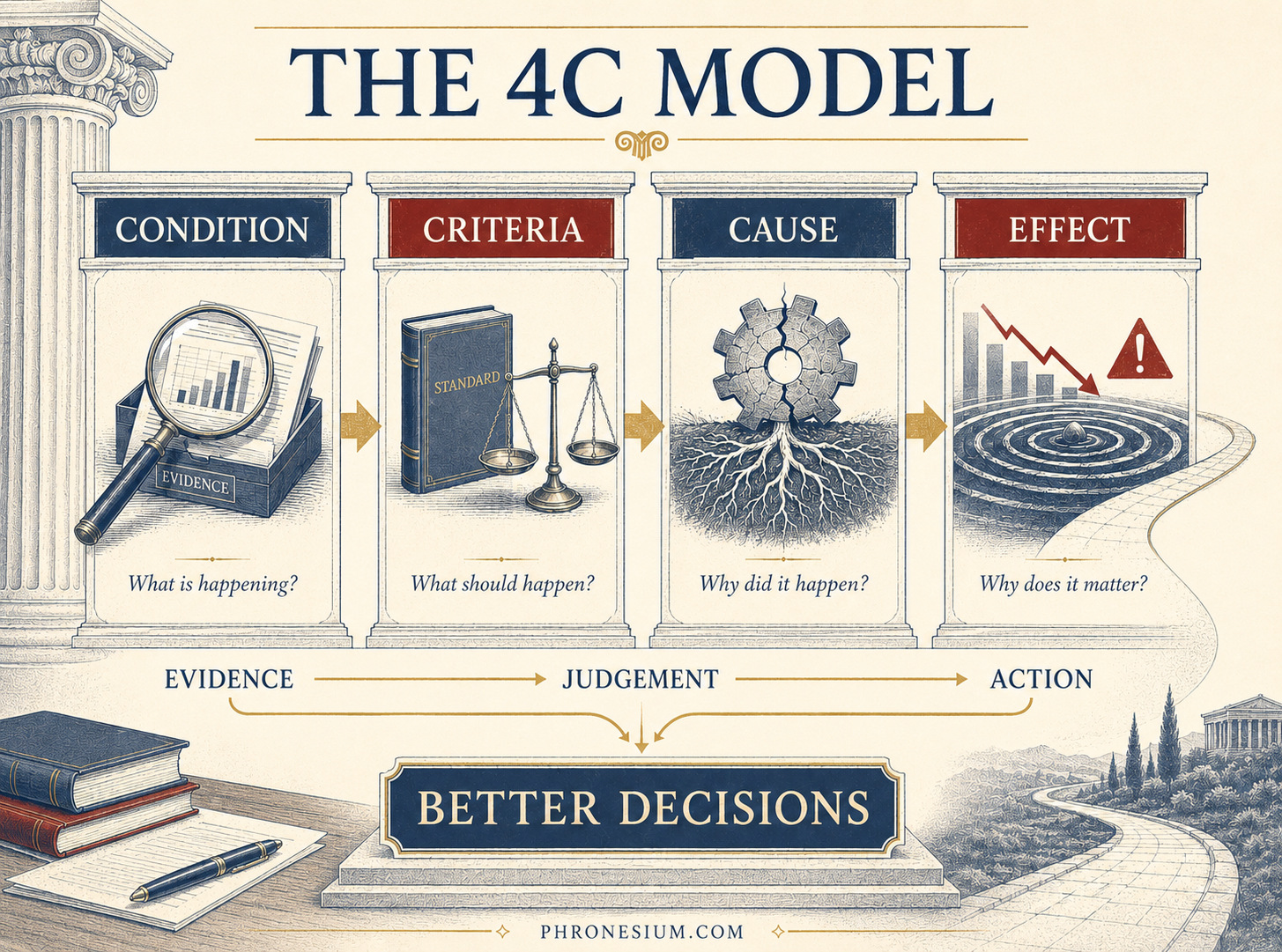
The 4C Model: From Audit Finding to Better Decision
A strong audit finding does more than describe what is wrong. The 4C model—Condition, Criteria, Cause and Effect—connects evidence, expectations, root causes and consequences, turning audit observations into clear arguments for action and better decisions.
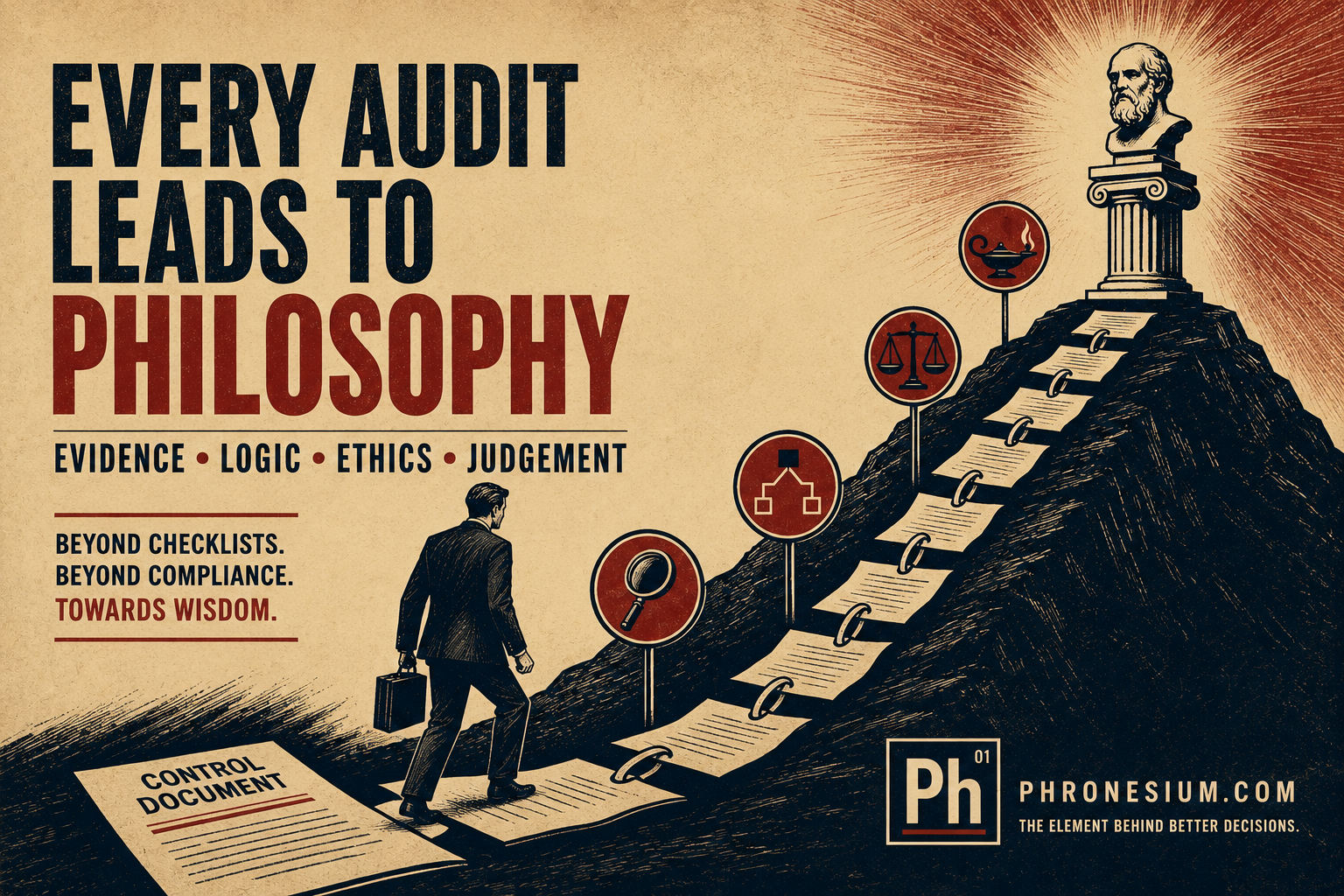
Every Audit Leads to Philosophy
Philosophy is not separate from audit. It is present whenever we question evidence, test an assumption or decide what a finding really means. From Socratic scepticism to Aristotle’s practical wisdom, philosophy helps auditors think clearly, challenge confidently and reach better judgements. Every audit, followed deeply enough, leads to first principles.
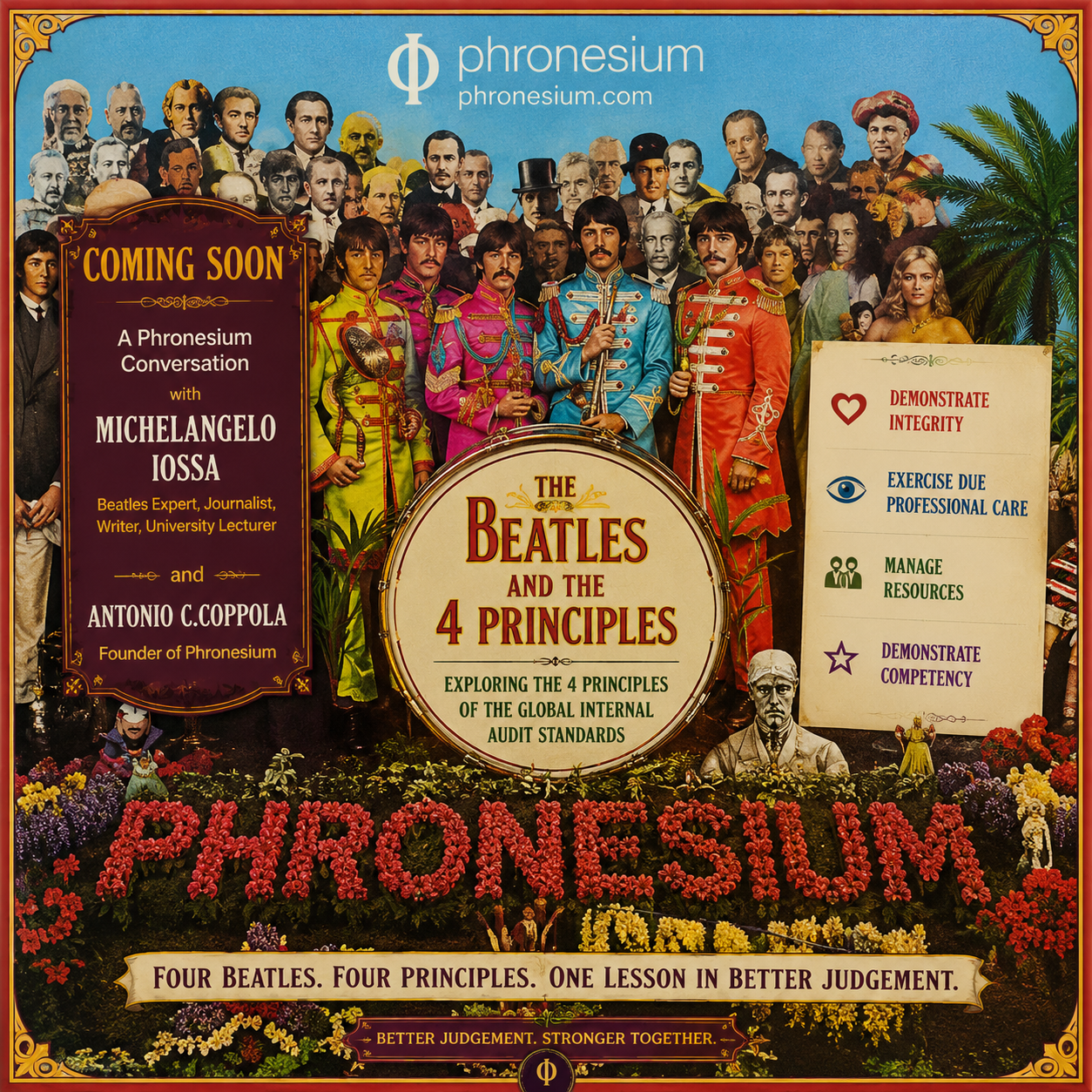
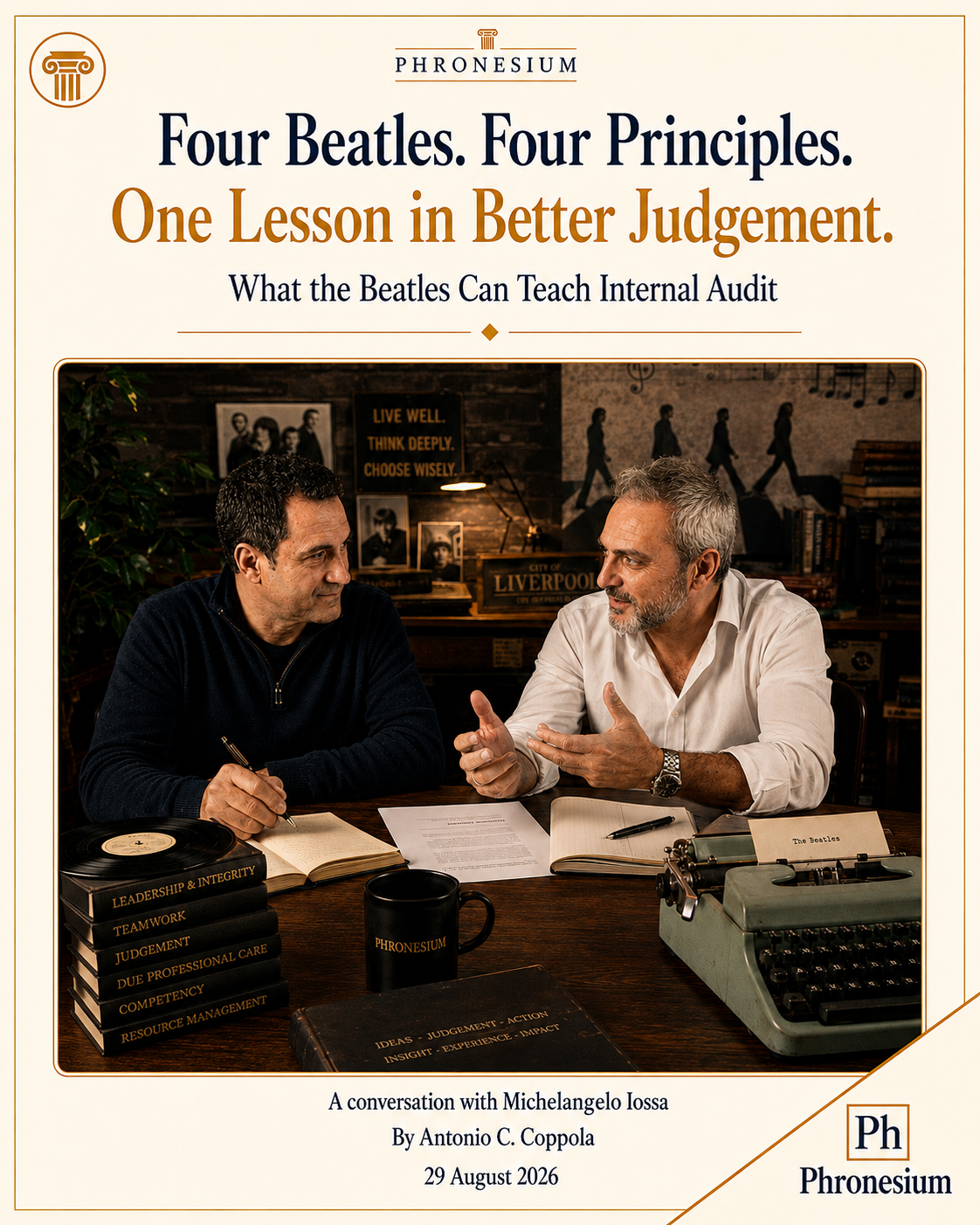
Coming Soon: Four Beatles. Four Principles. One Lesson in Better Judgement.
What can the Beatles teach internal audit?
More than we might expect.
In this forthcoming Phronesium conversation, Michelangelo Iossa joins Antonio C. Coppola to explore how integrity, professional care, resource management and competency shaped one of history’s most remarkable creative partnerships—and what auditors can learn from it.
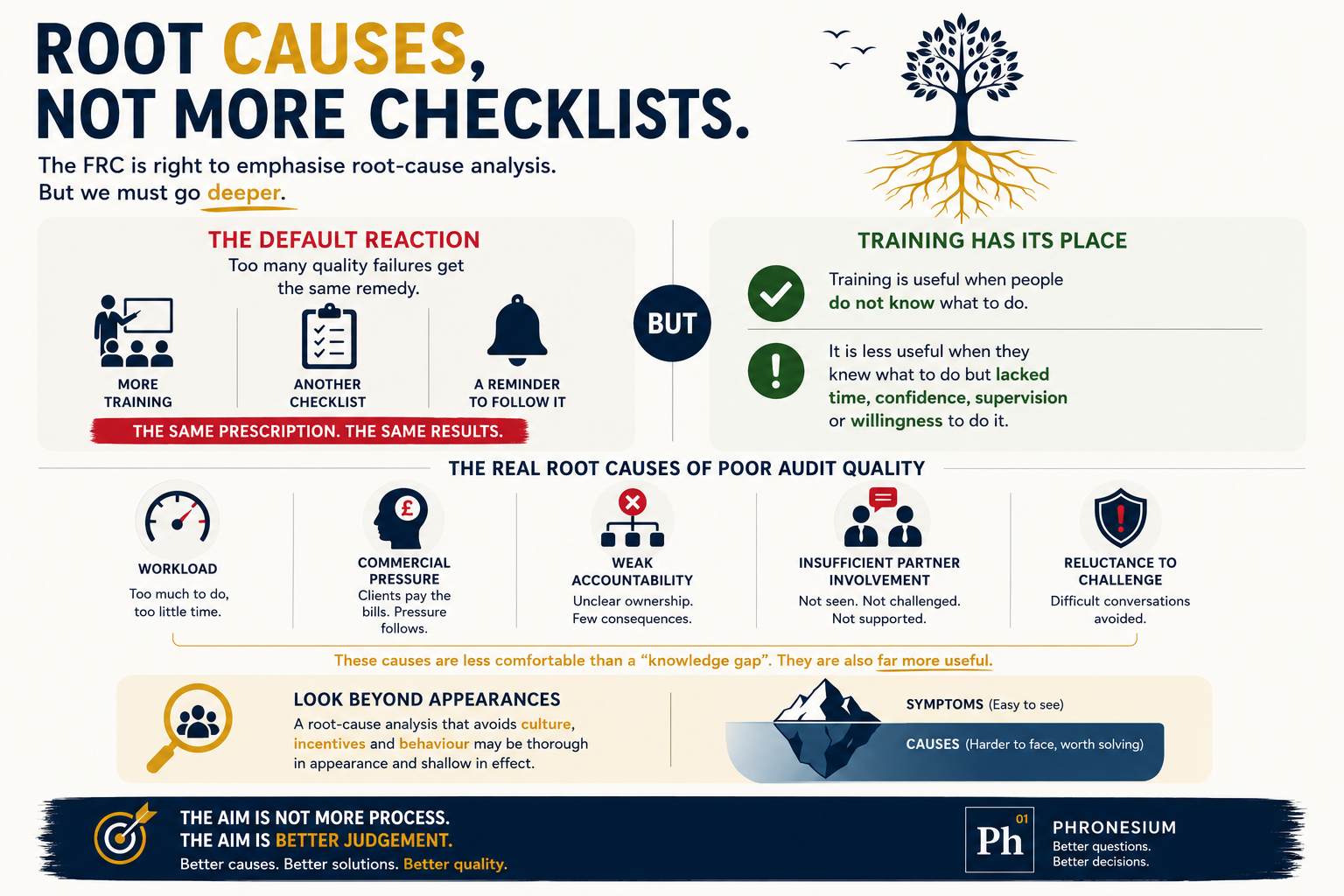
Root Causes, Not More Checklists
Audit failures are often treated with the same familiar medicine: more training, another checklist and a reminder to follow the checklist. But the real causes may lie deeper—in workload, commercial pressure, weak accountability, poor supervision or reluctance to challenge. Root-cause analysis only works when it is willing to examine culture, incentives and behaviour, not merely the visible mistake
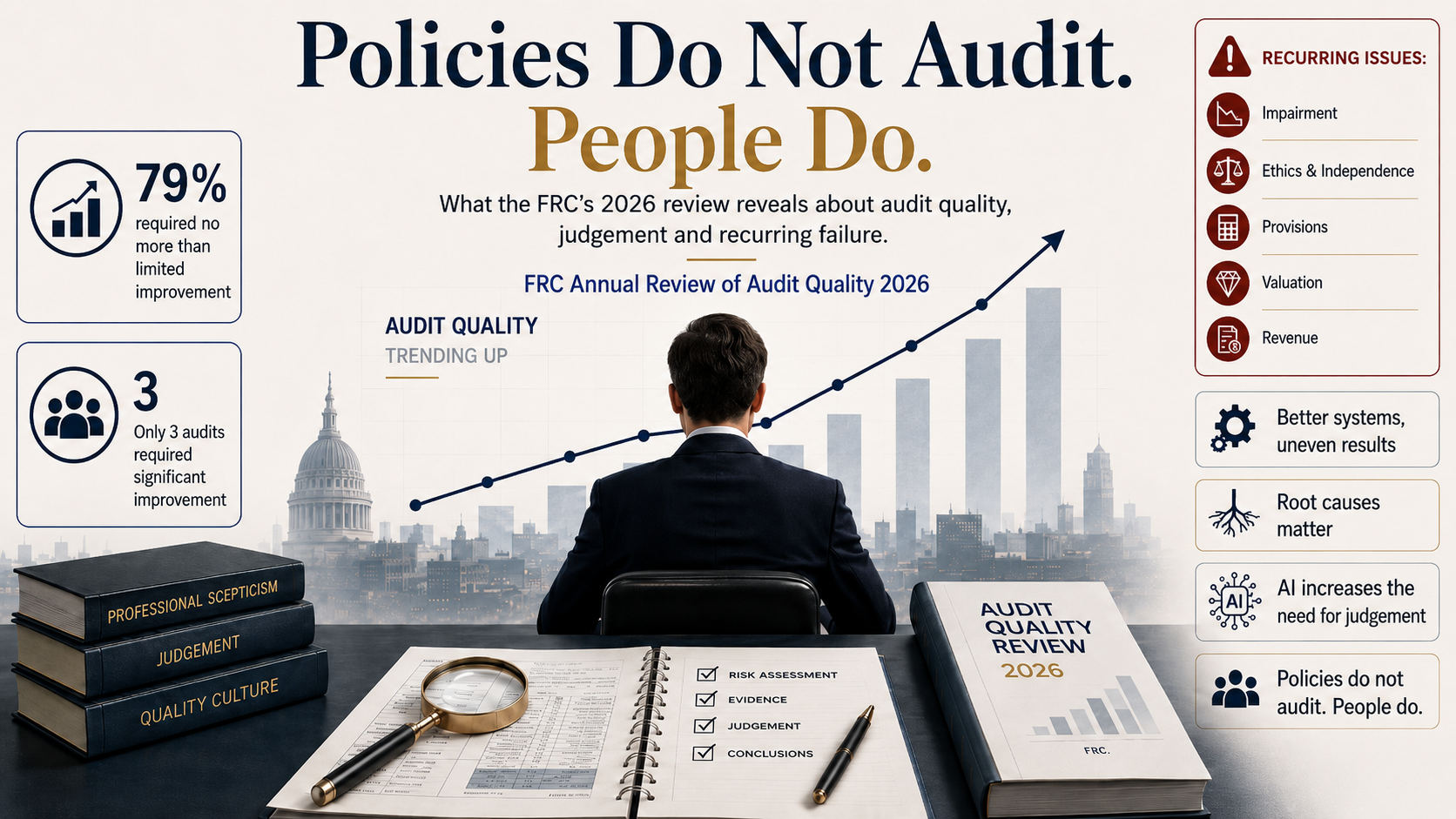
Policies Do Not Audit. People Do.
Audit quality is improving, but the old weaknesses remain: weak challenge, thin evidence and too much faith in process. The FRC’s 2026 review shows that better systems help, but they do not replace judgement. Policies do not audit. People do.
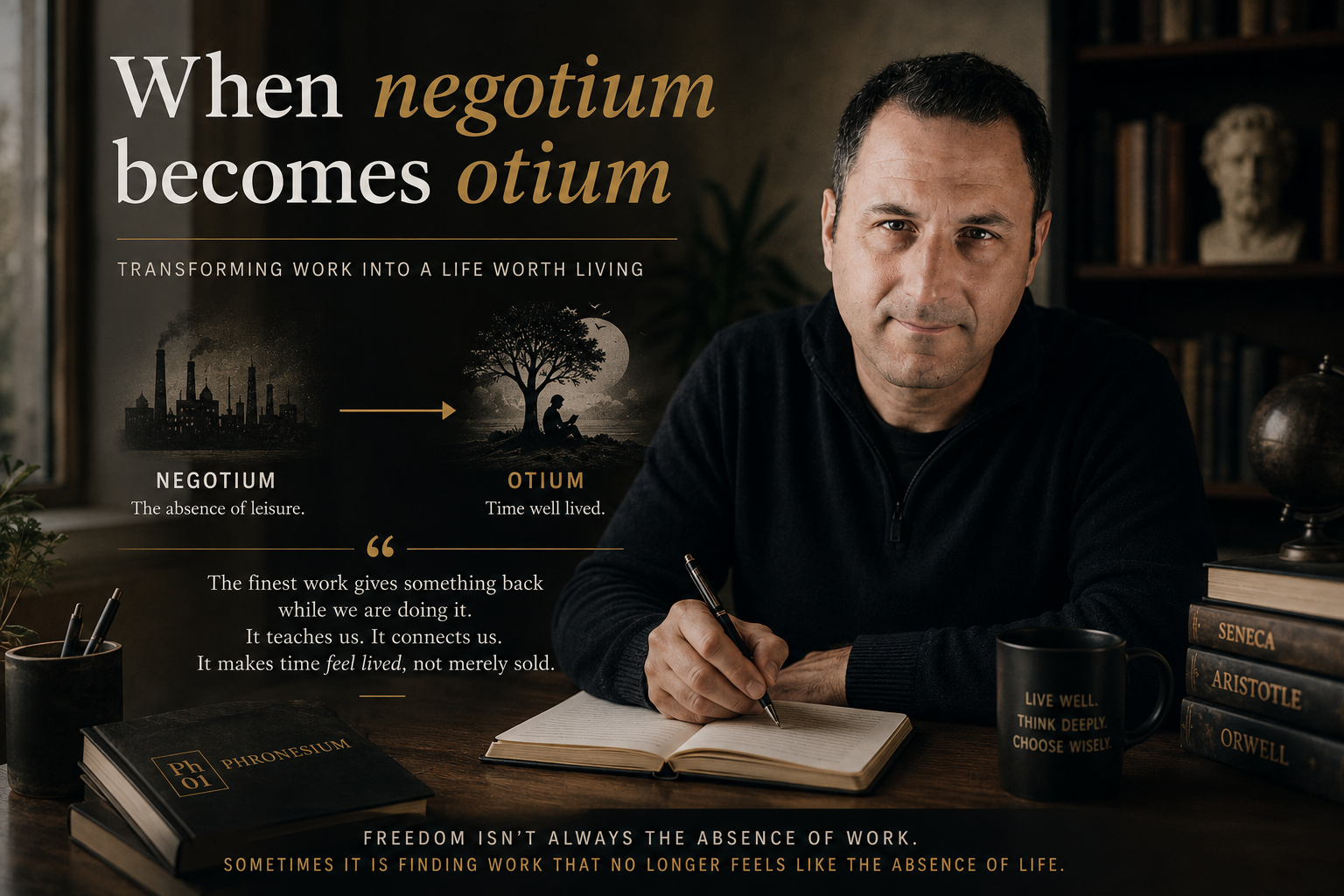
When negotium becomes otium
Perhaps the best life is not one in which we simply escape negotium, but one in which we transform it.
When we work on something we genuinely enjoy, curiosity replaces obligation and purpose replaces routine. The work still requires effort, but it no longer feels empty.
Sometimes freedom is not the absence of work.
It is doing work that no longer feels like the absence of life.
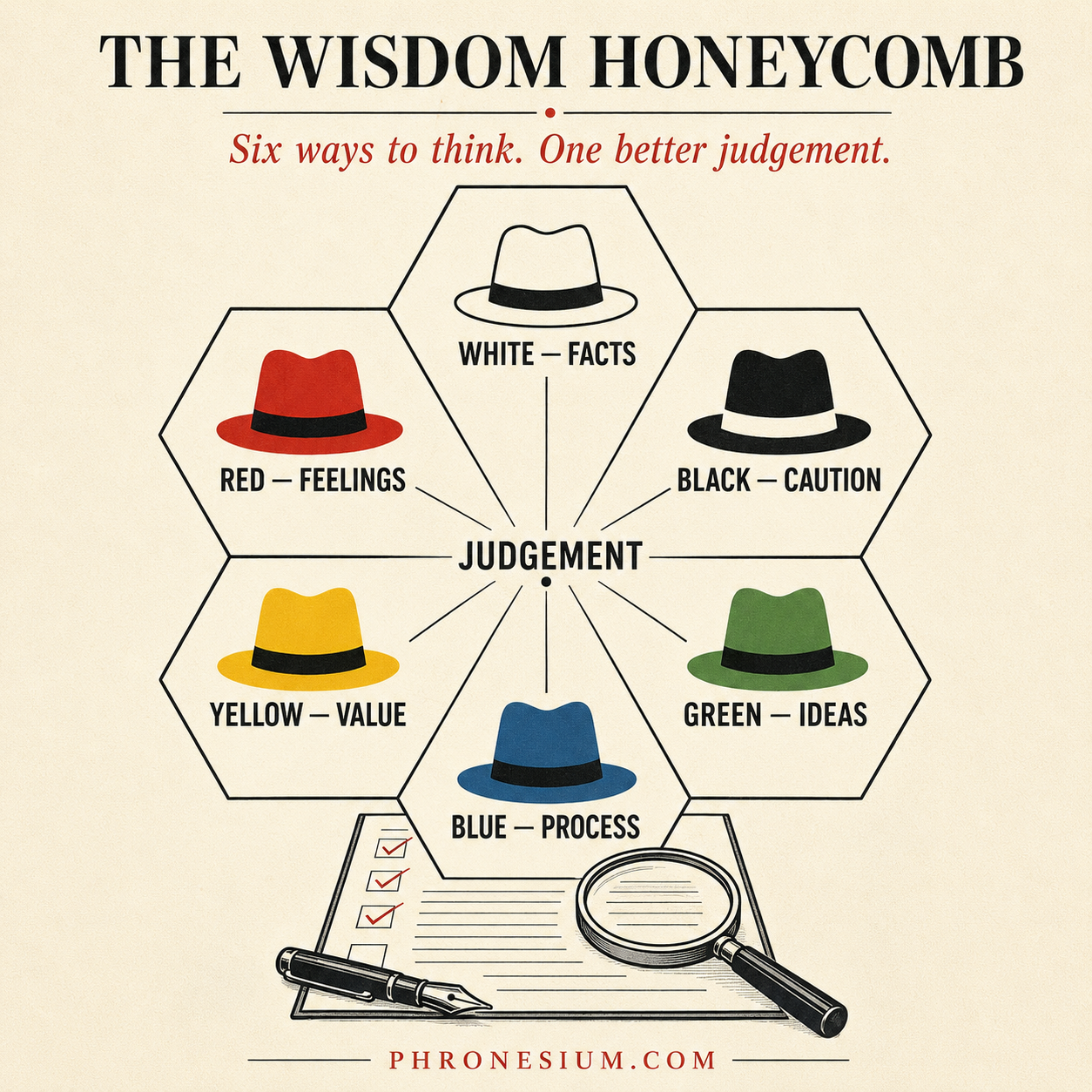
Six Thinking Hats: A Simpler Way to Think Together
Good thinking is not one skill, but six. Inspired by Edward de Bono’s Six Thinking Hats, the Wisdom Honeycomb helps auditors separate facts, feelings, risks, benefits, ideas and process—before bringing them together into one better judgement.